

Where questions become discoveries.
Interdisciplinary learning, collaborative projects, and independent research help students investigate big ideas and connect to the world around them.
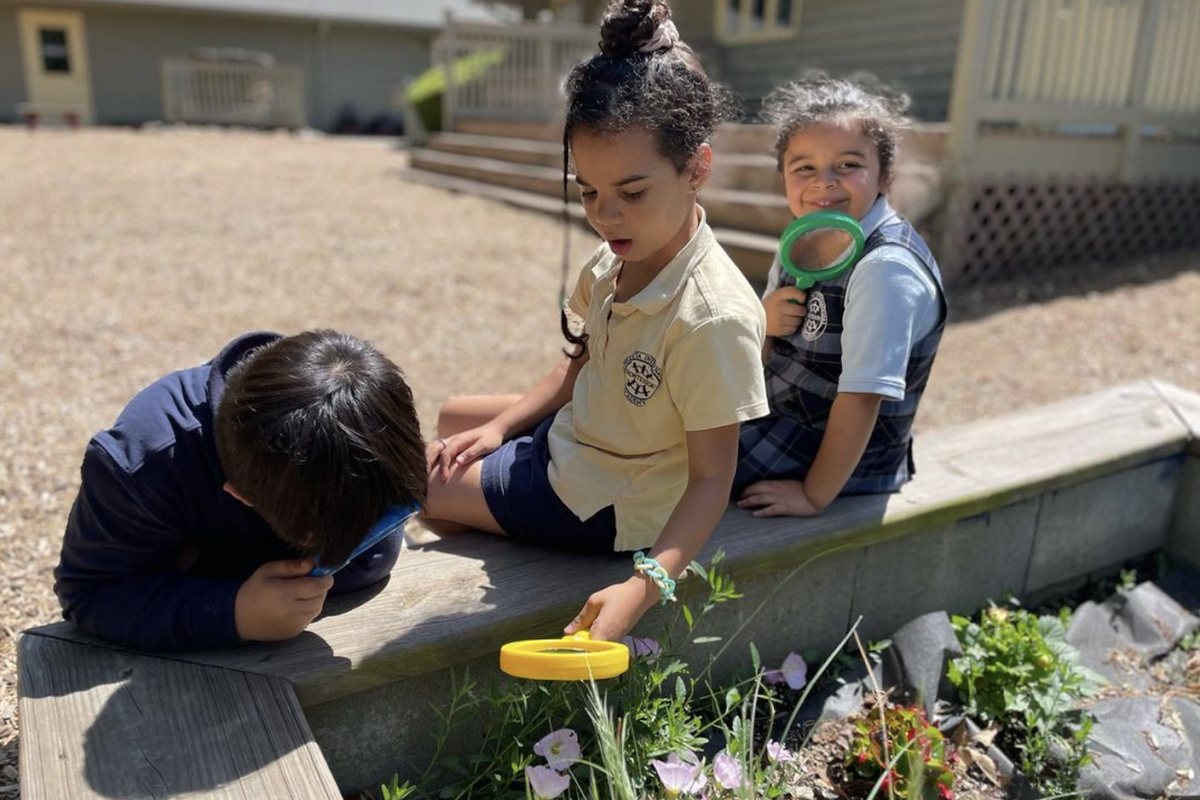
Big questions, real research.
Elementary-age children are natural researchers, drawn to big questions about the universe, history, and the natural world. Guides introduce this view of the world through the Great Lessons, a series of foundational stories that spark the imagination as an intellectual tool and connect science, geography, history, language, and mathematics into a coherent whole.
From these lessons, students move from concrete materials toward abstraction, working independently and in small groups on research, presentations, and hands-on projects that develop real academic depth alongside collaboration and communication skills. Daily Spanish continues throughout the Elementary years.
A curriculum built around connection.
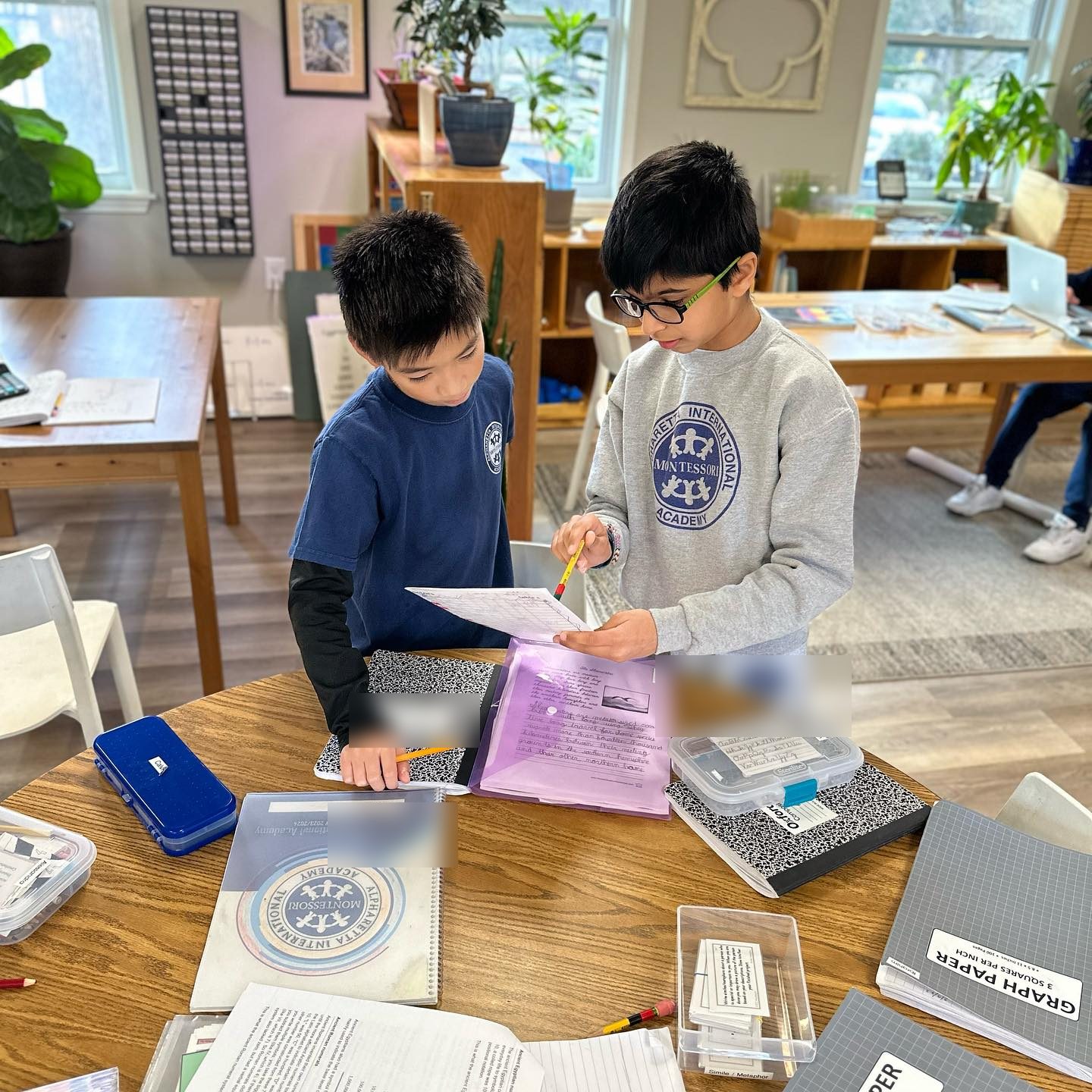
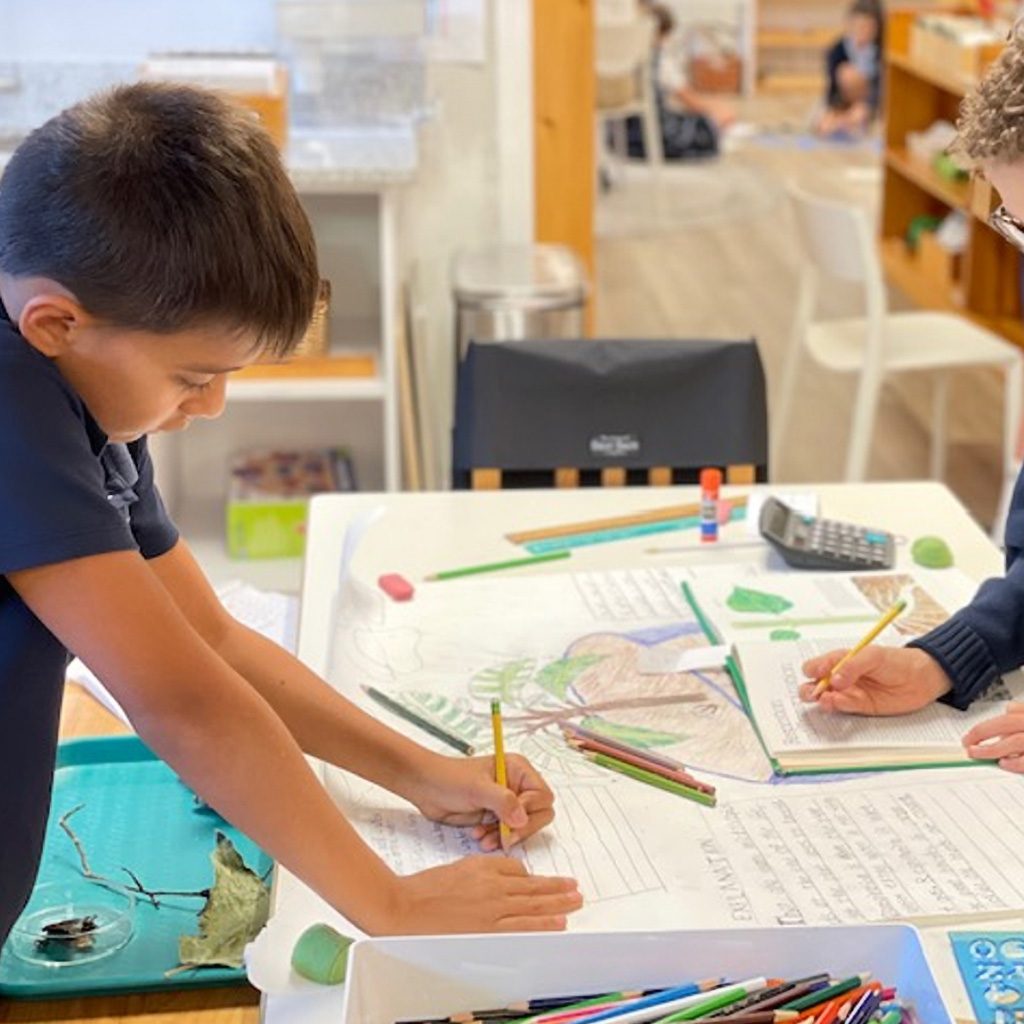
Independent Research
Guides introduce research lessons, and students gather sources and present findings, building genuine academic ownership.
Science & Geography
Hands-on experiments and cultural studies connect classroom learning to the wider world.
Collaborative Projects
Mixed-age teams practice leadership, negotiation, and shared responsibility, part of each child’s moral and social development.
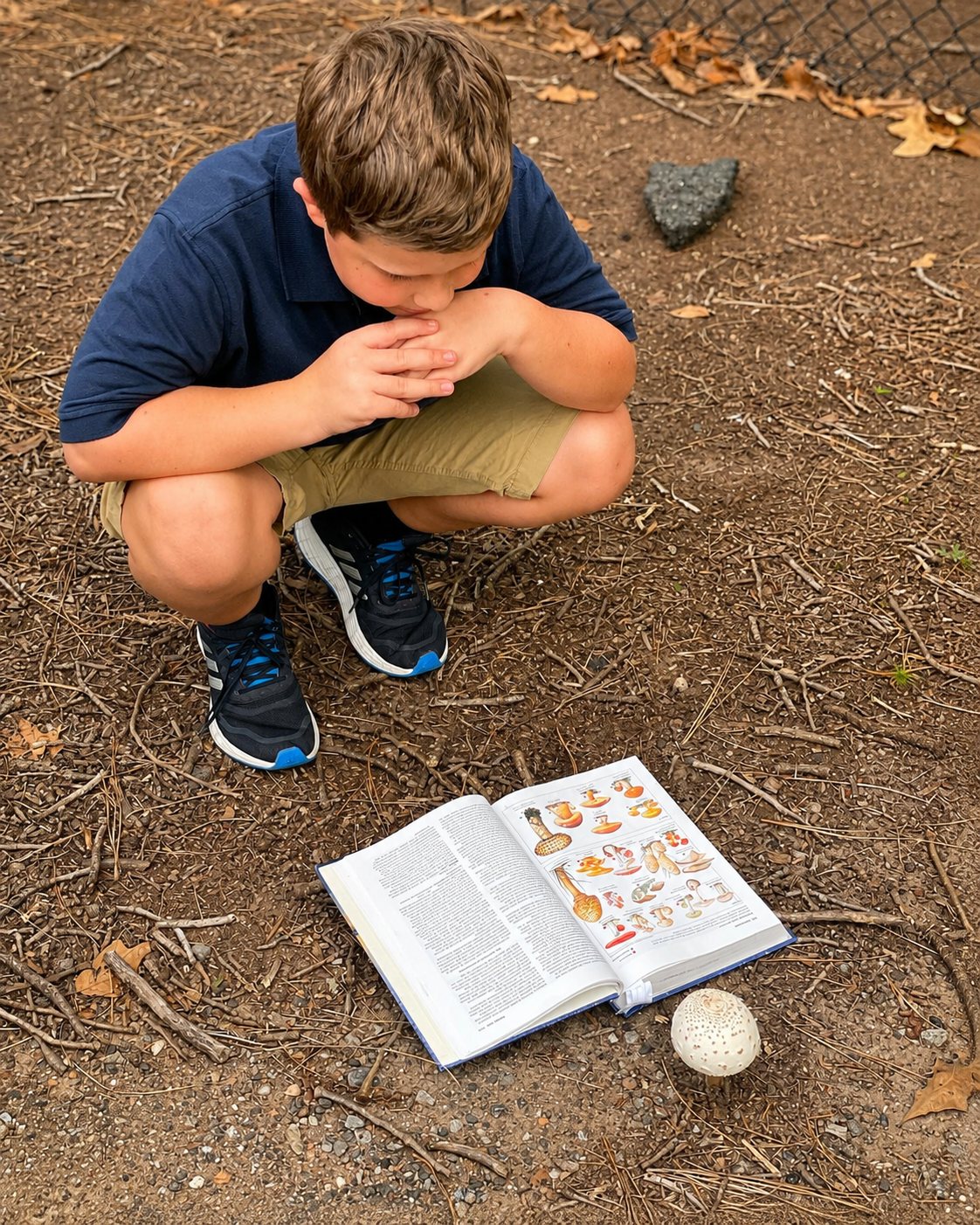
Students who drive their own learning.
By Elementary, children are ready to participate actively in planning and managing their work. Guides introduce essential lessons and curriculum, while students make increasing choices about sequence, follow-up work, research questions, collaboration, and how they demonstrate understanding.
Research
Working from lessons their guide introduces, students choose a follow-up question, gather sources, and dig in.
Projects
Hands-on projects turn research into something built, written, or created.
Leadership
Older students mentor younger classmates, practicing responsibility within the community.
Presentations
Sharing findings with classmates builds confidence and communication skills.
What your child's day looks like.
A steady daily rhythm that helps children feel secure and know what comes next.
Morning Community and Work Planning
Children gather, check in, and plan their work for the day ahead.
Extended Montessori Work Cycle
A long, uninterrupted block for deep concentration and self-directed study.
Research, Lessons, and Collaborative Projects
Small-group lessons, research, and projects that build on each child’s questions.
Lunch and Outdoor Time
A community meal followed by time to move and play outdoors.
Cultural Studies, Enrichment, and Going-Out Experiences
Specialist classes, cultural studies, and trips beyond the classroom that extend learning into the wider world.
Reflection and Dismissal
Children reflect on their work and close out the day.
“Without grades and tests, how do we know they are learning?”
It is a fair question, and the honest answer is that we know in more detail than a report card could show.
Guides track every lesson given, every material mastered, and where each child is stuck. That record is more specific than a letter grade, because it says what a child can do rather than how they compared to the class that week.
What the absence of grades changes is motivation. Children work because the work is interesting, not because a score is coming. That habit tends to outlast the years when someone else is assigning the grades.